back


misc. dyno's


These records are intended as a library mainly for myself.
I’ve tested and proved some configurations which make me understand some suspension basics better.

- For the test of different shim stacks I only used a flow/pressure recording. It doesn’t show the pressure build up at acceleration.
     Like an engine dyno. It shows you the power at a specified rpm, but it gives you not an exact advice what you feel when you hit the throttle.
- do not compare different diagrams due to measurement inaccuracy (oil temperature / Oil flow is not very stable at different measurements)
- All components of a fork are a complex system, more than just valving of the BV and MV. It’s good to know some theory, but praxis is at least
    as important as theory!


measuring device:


different oil weights:


with/without blowoff springs:


tapered (common)shim stack vs. stack with only one shim diameter


another midvalve with blowoff spring and different bleeds:


red curve follows yellow curve


more thinner shims provide less HS damping:


different size valve ports:


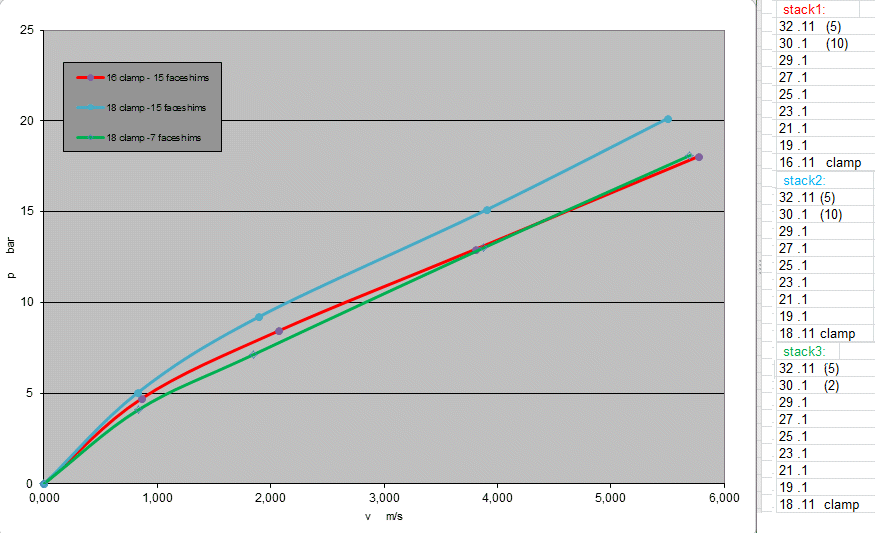
different clamps


comparison of a 14mm and 16mm clamp. even 32 face shims (with 14mm clamp) result in a softer damping than
15 face shims used with a 16mm clamp. this comparison was made with just 0.11mm shims, with the stock setup
(two 0.15mm shims) the difference is expected to be less because the thicker a shim, the more it tends to
be a clamp itself.


linkage ratio 09 KX450F


1l = 1 Liter = 1000cc = 0,26 Gallons
1m = 1 Meter = 3.28 feet = 39.37 inch
0.1mm (common shim thickness) = 0.00394 inch
1 bar = 14.5 psi